Visual Research & Narrative Design
My visual work uses generative systems as research tools rather than autonomous creators by leveraging careful and detailed prompt engineering, historical reference modeling, and iterative refinement along with post-production image editing. This allows me to explore how cultural memory, power, Disability, and narrative can be represented visually using cutting-edge available creative technology.
These two samples are among those used to support historical interpretation, creative concept development, and public-facing storytelling, particularly in contexts where traditional imagery is inaccessible, insufficient, unhelpful, or exclusionary.
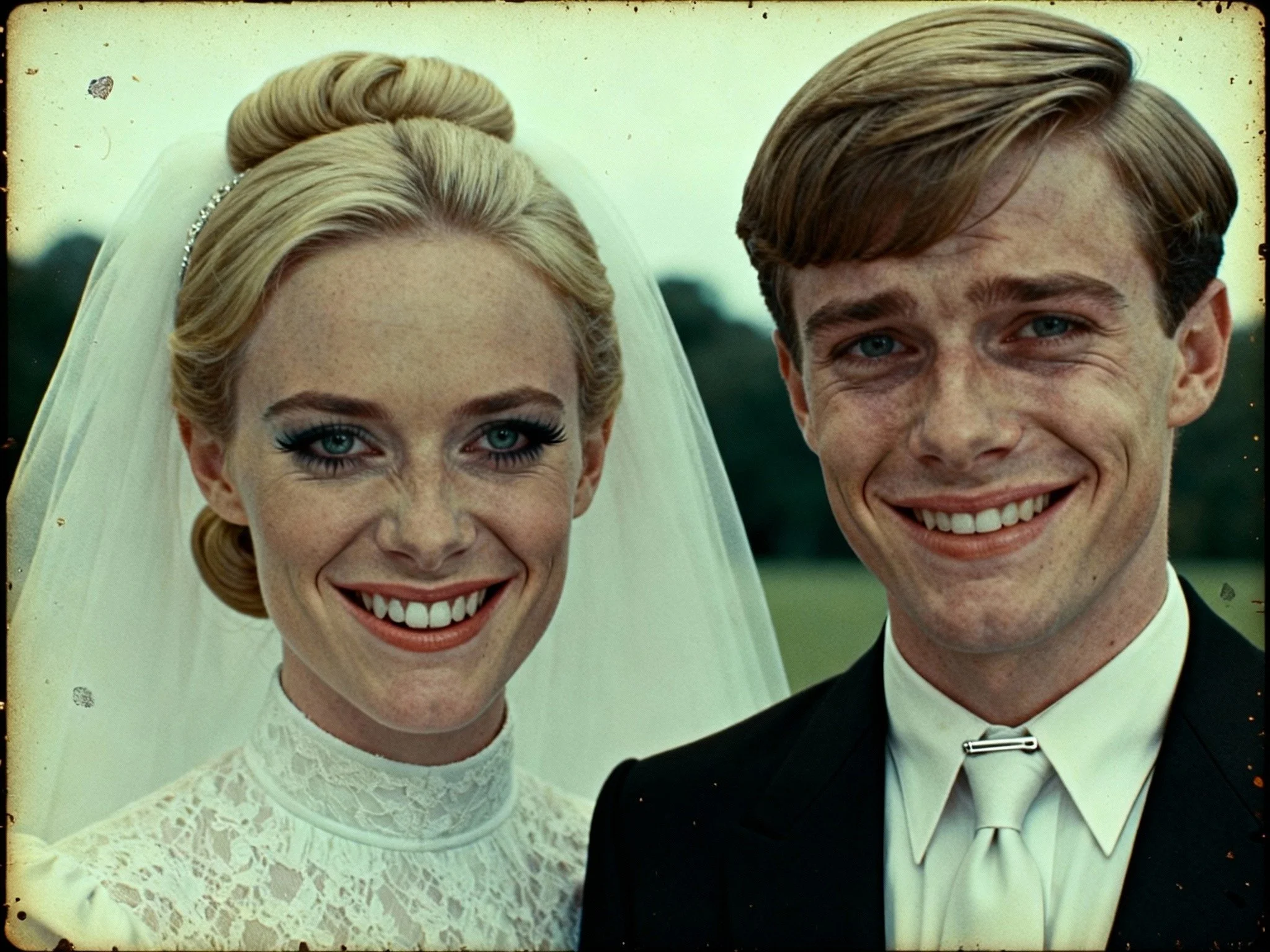
American Vernacular Study, Bride, 1971
Visual research for narrative development
Conceived as a constructed “found photograph,” this image functions as visual research into how certainty, conflicting memories, physical evidence, femininity and masculinity and moral authority are encoded in vernacular American photography of the early 1970s. The work examines the visual language of religious domesticity (particularly within belief systems where marriage, identity, and eternity are symbolically inseparable).
The image was developed through iterative prompt engineering heavily informed by period-accurate wedding photography, regional grooming norms, and postwar ideals of “purity” and respectability in the American West. Particular attention was paid to deliberately clashing facial affect and compositional balance, producing an expression of confidence in the bride that reads as conviction rather than warmth and is unmatched by the groom.
This study supports a script development by testing how satire can operate through restraint and realism rather than exaggeration. By remaining visually plausible, the image allows ideology to surface through posture, presentation, and affect, without overt commentary.
The resulting portrait is culturally specific and psychologically grounded, demonstrating how generative systems can be used as analytical tools for character construction, visual anthropology, and narrative research.

Sophocles' Antigone
Conceived as a "lost portrait" from the classical era, aims to capture a raw and realistic vision of a powerful historical woman such as Sophocles' Antigone. The dramatic chiaroscuro lighting is reminiscent of that used by Caravaggio and was precisely engineered to sculpt the woman's features and create an atmosphere of intense drama during a conversation of conflict. This work demonstrates a mastery of cinematic lighting and emulation of defiant classical Greek womanhood, as well as the ability to craft character portraits that are both historically informed and emotionally resonant.