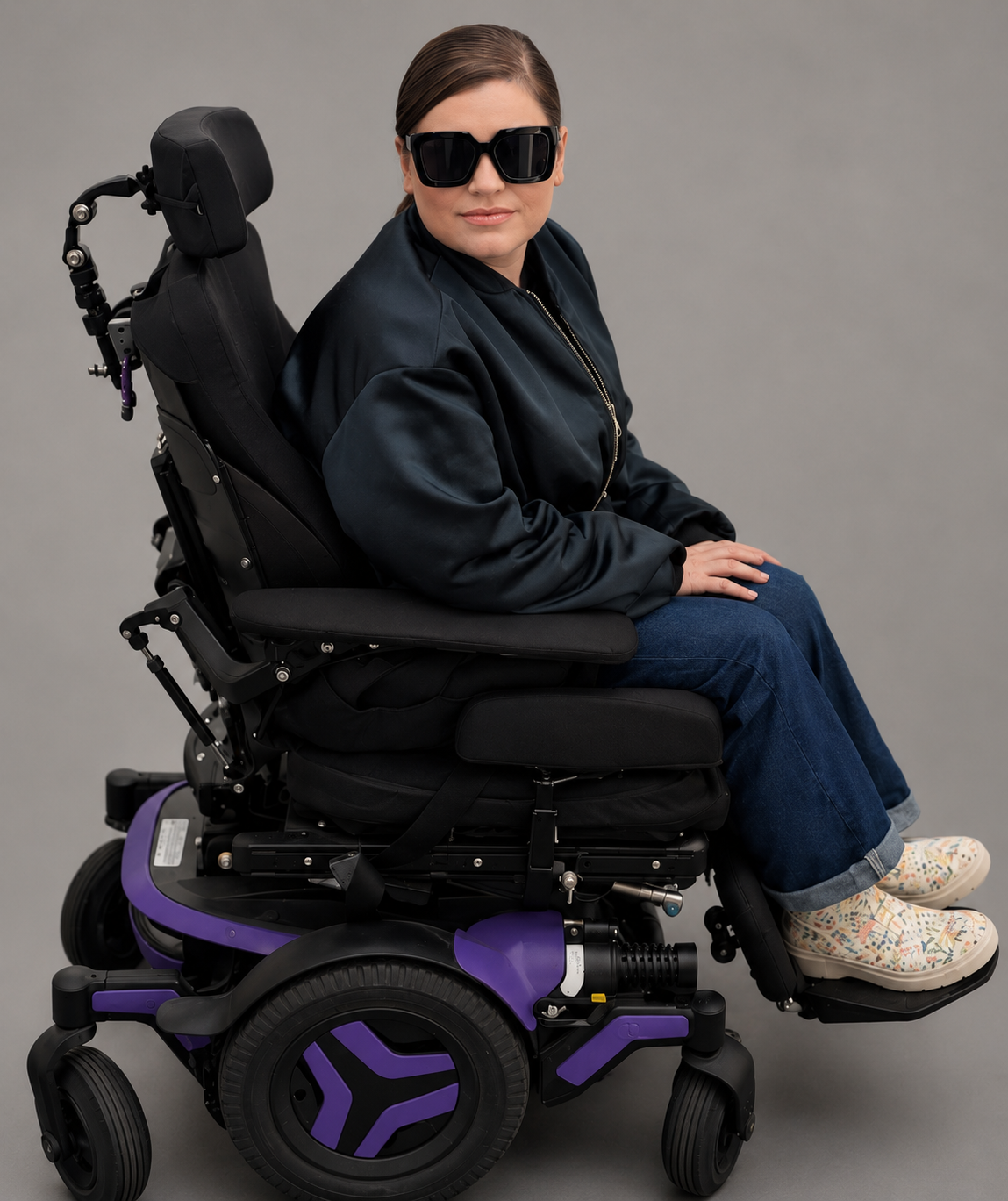
Disability Civil Rights Enforcement Specialist
Disability Civil Rights Enforcement & Access Documentation
Kelsey Maurine Brickl is a disability civil-rights enforcement specialist whose work focuses on institutional accountability and the preservation and protection of existing lawful access for Disabled people.
Selected results
Secured expanded ADA restroom access in professional Chicago theatres through direct work with ownership, converting inconsistent staff practice into lawful, usable facilities.
Established a written elevator-access protocol and staff-training standard at a major Michigan Avenue restaurant after a disabled patron was blocked by a non-functioning lift, including manager checklist controls and host escort procedures.
Forced a historic California theatre to abandon a “grandfathering” defense and implement ADA-compliant wheelchair seating and access policy after renovation-era obligations were placed on the record.
Obtained a confidential, binding change to a major U.S. carrier’s disability policy—an operational reversal, not a voucher or courtesy exception.
Placed a national rail operator on written notice regarding unsafe and discriminatory use of occupied wheelchair space for luggage and equipment, with the matter preserved as an accessibility-compliance file rather than a customer-service ticket.
Secured written, multi-officer screening arrangements for non-ambulatory, pacemaker-protected travel through TSA, including Passenger Support Specialist coordination, alternative screening, paced communication, and protection of medically necessary mobility equipment.
Obtained written acknowledgment of ADA failures from a major hotel group, with specific access improvements committed in the operational record.
After formal legal notice to a New York theatre, compelled published disability exceptions to a phone-pouch policy, a third-party accessibility audit, expanded assistive-listening inventory, and staff training beyond front-of-house—shifting device access from an unwritten favor to a documented compliance process.
Obtained written billing and scheduling compliance from a major New York disability-services provider after a continuity-of-care failure affecting a patient with intellectual and developmental disabilities.
Method behind the results: Written notice, named decision-makers, evidence holds, regulator copies, date-certain operational change. Not tickets, credits, or silence.
Current enforcement docket
Live documentation and correction of access failures across theatres, film premieres, transportation, hospitality, and public events in the United States, the United Kingdom, and the European Union.
Active files on press accreditation and wheelchair placement for designated performances, seating and egress conditions at major halls, and unresolved stage-door and digital-presale access.
Parallel campaigns against driverless fleets and transit systems that cannot independently serve full-time users of complex power wheelchairs, with federal, state, and municipal regulatory complaints already in motion.
Hospitality and travel enforcement through regulatory escalation and litigation: corporate complaint-resolution failures, evidence holds, transportation gaps, and discriminatory disability policies.
Device and media work challenging phone-free systems and editorial framing that recode disability-related technology as recreational phone use, including regulator review and subject-access requests.
Open data-protection and victimization records against cultural producers and venues that classified, delayed, or retaliated after protected accessibility correspondence.
Unafraid to conduct and capable of time-consuming and tiring pro se litigation in various jurisdictions to pursue disability rights justice, Kelsey Brickl is currently representing an active § 58c appeal against the Republic of Austria, a docketed discrimination case in the New York Supreme Court that seeks no personal financial gain, a formal petition regarding discriminatory automated transport in Nevada, and data protection complaints in the United Kingdom and France.
She is currently acting as a qualified educational, medical, and travel consultant and advocate for numerous Disabled individuals in several jurisdictions.
Brickl treats accessibility as a statutory duty involving written notice, evidence preservation, regulatory escalation, and date-certain implementation, not as discretionary customer service. Her method begins with contemporaneous site and operational records: what was requested, who held authority, what was promised in writing, and what occurred at the point of service.
Correspondence is drafted to place named decision-makers on notice of specific legal duties, requested accommodations, and the distinction between policy language and implementation. Evidence is preserved through chronological files, subject-access requests, litigation holds, and copies to regulators so later accounts cannot be rewritten as mere customer-service disputes, erased or deleted inappropriately, or mischaracterized.
Escalation follows only after the record shows foreseeable noncompliance, with agency complaints, equality and data-protection filings, and public accountability ideally aimed at durable operational change rather than private settlement or substitute tickets.
Kelsey Maurine Brickl has written about her commitment to carry out disability civil rights enforcement work despite the physical, emotional, mental, reputational, and financial cost in essays such as Just Keep Spinning.